segunda-feira, 10 de abril de 2017

O sofisticado nepotismo das universidades brasileiras


O sofisticado nepotismo das universidades brasileiras


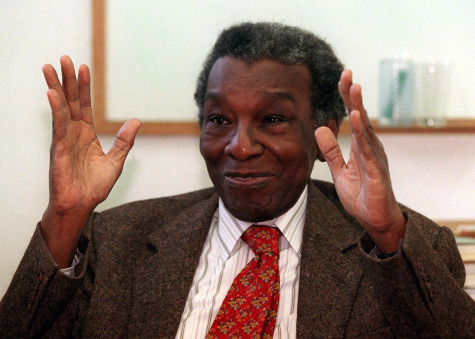
Quando recebeu o título de professor emérito da Faculdade de Filosofia, Letras e Ciências Humanas da Universidade de São Paulo (USP), em 1997, o geógrafo Milton Santos[1] pronunciou um discurso intitulado O intelectual e a universidade estagnada.[2] Nessa intervenção, indagando-se sobre as possibilidades de produção adequada de conhecimento num mundo em constante mudança, questionou:
Como fazê-lo no Brasil, onde a vida intelectual está organizada em torno de clubes, de clãs e do enturmamento, sendo às vezes mais útil passar as noites em reuniões com os colegas que mandam, do que queimar as pestanas, como antigamente se dizia, em frente dos livros.
Santos aponta para um fenômeno bastante comum na paisagem universitária nacional, a saber: a endogamia. Formam-se grupos de poder e de influência entre os membros da comunidade acadêmica, os quais aparelham e capturam as instituições, mandando, desmandando e ditando seus rumos e perpetuando-se nas posições de chefia. Nesses casos, como disse o geógrafo, vale mais a pena investir o tempo em cópulas sociais – quando não físicas – com colegas influentes do que em estudos, pesquisas e publicações.
Outro aspecto dessa formação de panelinhas é a endogenia: a produção das futuras gerações acadêmicas no interior da própria universidade, sem muito espaço para influências externas. Isso está bem documentado por uma pesquisa do departamento de ciência da computação da Universidade Federal de Minas Gerais (UFMG) sobre circulação de pesquisadores no Brasil[3]. Analisando cerca de seis mil pesquisadores brasileiros, o grupo observou que apenas 20% (um quinto do total, portanto) constroem suas carreiras profissionais a mais de quinhentos quilômetros (500km) de onde fizeram sua formação universitária. A avassaladora maioria permanece nos entornos de sua alma mater, o que facilita – geograficamente, inclusive – a perpetuação de esferas de influência.
O efeito mais pernicioso dessa estrutura de reprodução endogâmica e endogênica é o engessamento e a falta de circulação – não só de pessoas, mas de ideias. Gerações atuais costumam repetir ou, na melhor das hipóteses, reformular os trabalhos realizados por seus orientadores e orientadoras e, consequentemente, treinar gerações futuras para seguir na mesma toada: a repetição da repetição, ad nauseam. Ora, a força das universidades e da vida acadêmica reside precisamente em sua capacidade de abertura a novas ideias. Sem ela, é impossível à universidade realizar sua tarefa mais vital, da qual sua sobrevivência depende estritamente, como bem apontou Santos:
A universidade, aliás, é, talvez, a única instituição que pode sobreviver apenas se aceitar críticas, de dentro dela própria, de uma ou outra forma. Se a universidade pede aos seus participantes que calem, ela está se condenando ao silêncio, isto é, à morte, pois seu destino é falar. A fidelidade reclamada não pode ser à universidade, e a ela não temos razão para ser fiéis. Nossa única fidelidade é com a ideia de universidade. E é a partir da ideia sempre renovada de universidade que julgamos as universidades concretas e sugerimos mudanças.
Pois bem, embora não se configurem estritamente como casos de nepotismo – o favorecimento de parentes na nomeação de cargos – porque não se tratam de relações consanguíneas, há de se convir que a atuação de padrinhos e madrinhas acadêmicos é decisiva na construção de carreiras na universidade. Além de impedir a renovação científica, intelectual e crítica das instituições, pressupostos de seu fortalecimento, essa prática – que não é exclusivamente brasileira – provoca distorções quanto à primazia da qualidade acadêmica ou promoção de certa meritocracia.
Para além de razões culturais, antropológicas e sociológicas que invocam traços da formação brasileira como compadrio e cordialidade, uma das causas desse fenômeno está na própria estrutura de carreira das universidades brasileiras, especialmente as públicas. Uma vez aprovado(a) no concurso, o(a) docente adquire estabilidade no cargo após um período de experiência de alguns anos – normalmente três. Assim, ele ou ela só mudará de instituição para se transferir para outra de maior prestígio. Nas melhores universidades do país, isso raramente acontece.
Como combater esse problema? Engana-se quem pensa que a solução esteja na extinção da estabilidade. Países anglófonos, como Estados Unidos, Inglaterra e Austrália, por exemplo, concedem estabilidade a uma parcela cada vez menor de docentes[4], o que gera uma massa de profissionais com contratos temporários instáveis e precários, sobrecarregados por obrigações e impossibilitados de desenvolver pesquisas de médio-longo prazo – o que, irônica e paradoxalmente, lhes qualificaria para postos permanentes. Países como Alemanha, França e Itália têm soluções locais para promover algum grau de circulação em seus sistemas universitários, mas essas costumam estar intimamente ligadas à história e à constituição desses.
Não é necessário, entretanto, importar soluções. Um caminho se encontra disponível no Brasil, nas carreiras jurídicas, por exemplo. Carreiras federais são organizadas nacionalmente, e os ingressantes distribuídos pelas diversas Unidades da Federação de acordo com a demanda e disponibilidade de vagas de cada uma delas (exemplo: Ministério Público Federal). Ao longo da carreira, a cada x anos, o(a) profissional pode optar por se transferir para outra localidade – novamente de acordo com a demanda e a disponibilidade de vagas. O mesmo acontece em esfera estadual (exemplo: magistratura estadual). Isso tudo sem prejuízo da estabilidade no cargo.
Por que não tentar algo semelhante na carreira acadêmica? Docentes e pesquisadores poderiam prestar concursos federais e estaduais, após cuja aprovação seriam alocados nas instituições que carecessem de profissionais. Alguns anos depois, poderiam solicitar transferência para outras, se for de seu interesse.
Naturalmente, não se trata de uma solução perfeita. Ela não impede a captura de bancas de concursos por grupos de influência e distorções sistêmicas. No entanto, já é mais do que se tem feito hoje para combater esse grave problema: nada. Dado o que está em jogo, vale a aposta.
Rafael Barros de Oliveira - Colaborador do Terraço Econômico
[1] https://pt.wikipedia.org/wiki/Milton_Santos
[2] http://www.adusp.org.br/files/revistas/11/r11a03.pdf
[3] http://revistapesquisa.fapesp.br/2016/01/12/circulacao-limitada/
[4] https://www.insidehighered.com/news/2009/05/12/workforce

sábado, 24 de dezembro de 2016

O que é pesquisa translacional?

http://hypescience.com/pesquisa-translacional-o-que-e/

Conceitua-se pesquisa translacional como sendo toda a pesquisa que tem seu início na ciência básica e sua conclusão na aplicação prática do conhecimento apreendido.
Em especial tem-se sua aplicação na medicina, quando, por exemplo, na pesquisa sobre uma determinada proteína presente em um canal de membrana celular tem-se a continuidade do processo até sua culminação com o desenvolvimento de uma medicação para a terapia de uma determinada doença degenerativa.

Na pesquisa tradicional correntemente se divide a tarefa em dois grupos estanques: Um de pesquisa básica (ou laboratorial) e outro de pesquisa clínica, onde, na maioria dos casos não se permeia nenhuma articulação entre os dois, existindo um hiato permanente entre esses dois tipos de pesquisa.
Por esta razão,  muitas vezes, o conhecimento produzido pela pesquisa básica não é bem aproveitado para fins práticos ou seu na melhor das hipóteses seu aproveitamento se dá de uma forma muito lenta e pouco promissora.
Com o advento da pesquisa translacional se observa uma continuidade do trabalho do pesquisador com a articulação entre o laboratório (onde se desenvolve as descobertas da ciência base) e a clínica (onde se realizam as aplicações práticas).
É fácil intuir que o caminho de  realimentação da clínica para o laboratório também favorece o avanço da conquista e aperfeiçoamento da ciência base.
Este itinerário  do  laboratório para a clínica  define a essência da pesquisa translacional em seu propósito de traduzir as descobertas básicas do laboratório em aplicações práticas para a clínica com eficiência, eficácia e agilidade.
Como é natural, as ideias que são testadas na clinica raramente se tornam eficientes de um dia para o outro. É sempre necessário um refinamento futuro.
Desta forma os resultados clínicos tendem também a retornar para o laboratório, num feedback, que como dito anteriormente contribui significativamente na melhoria e aperfeiçoamento daquela estratégia terapêutica, completando o itinerário de retorno da clínica para o laboratório.
A pesquisa translacional ou, no seu original em inglês, translational research, se propõe a preencher este vácuo existente entre o pesquisador da ciência básica e o clínico em seus campos de prática.
Embora o termo seja bastante recente, essa noção de “intercâmbio de resultados de pesquisa” não é.
Tal dinâmica vem sendo discutida desde as décadas de 1970 e 1980, nos Estados Unidos e também no Brasil, nos Seminários Nacionais de Pesquisa em Enfermagem, por exemplo.
O assunto é veiculado no editorial do Journal of the American Medical Association (JAMA), em 2002, quando se determina como essencial para melhorar a saúde humana a “necessidade de tradução de novos conhecimentos, mecanismos e técnicas geradas pelo avanço nas pesquisas básicas para oferecer novas possibilidades de prevenção, diagnostico e tratamento das doenças”.
A partir desta publicação, as demais áreas da saúde passaram a se questionar mais acuradamente sobre formas de conduzir para a prática assistencial esta “tradução”.
Em 2005, foi criado o “The Translational Research Working Group (TRWG)” (Grupo de Trabalho em Pesquisa Translacional), vinculado ao Instituto Nacional de Câncer, dos EUA, com o propósito de fomentar as pesquisas translacionais nesta área especifica.
A Universidade de Washington fundou, em 2007, o “Institute of Translational Health Sciences (ITHS)” (Instituto de Ciências Translacionais) tendo como principal foco a medicina genética.
Em 2009, são criados dois importantes periódicos: o “Translational Research – The journal of Laboratory and Clinical Medicine”, e o “The American Journal of Translational Research”.
No Brasil foi criado, recentemente, o Instituto Nacional de Ciência e Tecnologia Translacional em Medicina uma instituição de pesquisa multicêntrica financiada pelo CNPq  e sediada na Universidade Federal do Rio Grande do Sul.
Podemos afirmar sem nenhum exagero que tais iniciativas representam uma coleção estimulante de boas notícias.

sexta-feira, 4 de novembro de 2016

Why Professors Are Writing Crap That Nobody Reads

http://www.intellectualtakeout.org/blog/why-professors-are-writing-crap-nobody-reads

Why Professors Are Writing Crap That Nobody Reads


Professors usually spend about 3-6 months (sometimes longer) researching and writing a 25-page article to submit an article to an academic journal. And most experience a twinge of excitement when, months later, they open a letter informing them that their article has been accepted for publication, and will therefore be read by…
Yes, you read that correctly. The numbers reported by recent studies are pretty bleak:
- 82 percent of articles published in the humanities are not even cited once.
- Of those articles that are cited, only 20 percent have actually been read.
- Half of academic papers are never read by anyone other than their authors, peer reviewers, and journal editors.
So what’s the reason for this madness? Why does the world continue to be subjected to just under 2 million academic journal articles each year?
Well, the main reason is money and job-security. The goal of all professors is to get tenure, and right now, tenure continues to be awarded tenure based in part on how many peer-reviewed publications they have. Tenure committees treat these publications as evidence that the professor is able to conduct mature research.
Sadly, however, many academic articles today are merely exercises in what one professor I knew called “creative plagiarism”: rearrangements of previous research with a new thesis appended on to them.
Another reason is increased specialization in the modern era, which is in part due to the splitting up of universities into various disciplines and departments that each pursue their own logic.  
One unfortunate effect of this specialization is that the subject matter of most articles make them inaccessible to the public, and even to the overwhelming majority of professors. (Trust me: most academics don’t even want to read their peers’ papers.) Some of the titles in the most recent issues of the Journal of the American Academy of Religion—which proclaims itself as “the top academic journal in the field of religious studies”—serve as evidence:
  • “Dona Benta’s Rosary: Managing Ambiguity in a Brazilian Women’s Prayer Group”
  • “Death and Demonization of a Bodhisattva: Guanyin’s Reformulation within Chinese Religion”
  • “Brides and Blemishes: Queering Women’s Disability in Rabbinic Marriage Law”
Thus, increased specialization has led to increased alienation between not only professors and the general public, but also between the professors themselves.  
All of this is very unfortunate. Ideally, the great academic minds of a society should be put to work for the sake of building up that society and addressing its problems. Instead, most Western academics today are using their intellectual capital to answer questions that nobody’s asking on pages that nobody’s reading.
What a waste.      

quarta-feira, 5 de outubro de 2016

sexta-feira, 10 de julho de 2015

Science is heroic, with a tragic (statistical) flaw

https://www.sciencenews.org/blog/context/science-heroic-tragic-statistical-flaw

Science is heroic, with a tragic (statistical) flaw


Mindless use of statistical testing erodes confidence in research

statue of Achilles
Just as Achilles' heel was an unguarded weakness that ultimately brought down a hero of Greek mythology, dogmatic devotion to traditional statistical methods threatens public confidence in the institution of science.
SPONSOR MESSAGE
First of two parts
Science is heroic. It fuels the economy, it feeds the world, it fights disease. Sure, it enables some unsavory stuff as well — knowledge confers power for bad as well as good — but on the whole, science deserves credit for providing the foundation underlying modern civilization’s comforts and conveniences.
But for all its heroic accomplishments, science has a tragic flaw: It does not always live up to the image it has created of itself. Science supposedly stands for allegiance to reason, logical rigor and the search for truth free from the dogmas of authority. Yet science in practice is largely subservient to journal-editor authority, riddled with dogma and oblivious to the logical lapses in its primary method of investigation: statistical analysis of experimental data for testing hypotheses. As a result, scientific studies are not as reliable as they pretend to be. Dogmatic devotion to traditional statistical methods is an Achilles heel that science resists acknowledging, thereby endangering its hero status in society.
And that’s unfortunate. For science is still, in the long run, the superior strategy for establishing sound knowledge about nature. Over time, accumulating scientific evidence generally sorts out the sane from the inane. (In other words, climate science deniers and vaccine evaders aren’t justified by statistical snafus in individual studies.) Nevertheless, too many individual papers in peer-reviewed journals are no more reliable than public opinion polls before British elections.
Examples abound. Consider the widely reported finding that typographical ugliness improves test performance compared with questions printed in a nice normal font. It’s not true, as biological economist Terry Burnham has thoroughly established.
More emphatically, an analysis of 100 results published in psychology journals shows that most of them evaporated when the same study was conducted again, as a news report in the journal Nature recently recounted. And then there’s the fiasco about changing attitudes toward gay marriage, reported in a (now retracted) paper apparently based on fabricated data.
But fraud is not the most prominent problem. More often, innocent factors can conspire to make a scientific finding difficult to reproduce, as my colleague Tina Hesman Saey recently documented inScience News. And even apart from those practical problems, statistical shortcomings guarantee that many findings will turn out to be bogus. As I’ve mentioned on many occasions, the standard statistical methods for evaluating evidence are usually misused, almost always misinterpreted and are not very informative even when they are used and interpreted correctly.
Nobody in the scientific world has articulated these issues more insightfully than psychologist Gerd Gigerenzer of the Max Planck Institute for Human Development in Berlin. In a recent paper written with Julian Marewski of the University of Lausanne, Gigerenzer delves into some of the reasons for this lamentable situation.
Above else, their analysis suggests, the problems persist because the quest for “statistical significance” is mindless. “Determining significance has become a surrogate for good research,” Gigerenzer and Marewski write in the February issue of Journal of Management. Among multiple scientific communities, “statistical significance” has become an idol, worshiped as the path to truth. “Advocated as the only game in town, it is practiced in a compulsive, mechanical way — without judging whether it makes sense or not.”
Commonly, statistical significance is judged by computing a P value, the probability that the observed results (or results more extreme) would be obtained if no difference truly existed between the factors tested (such as a drug versus a placebo for treating a disease). But there are other approaches. Often researchers will compute confidence intervals — ranges much like the margin of error in public opinion polls. In some cases more sophisticated statistical testing may be applied. One school of statistical thought prefers the Bayesian approach, the standard method’s longtime rival.
Gigerenzer and Marewski emphasize that all these approaches have their pluses and minuses. Scientists should consider them as implements in a statistical toolbox — and should carefully think through which tool to use for a particular purpose.“Good science requires both statistical tools and informed judgment about what model to construct, what hypotheses to test, and what tools to use,” Gigerenzer and Marewski write.
Sadly, this sensible advice hasn’t penetrated a prejudice, born decades ago, that scientists should draw inferences from data via a universal mechanical method. The trouble is that no such single method exists, Gigerenzer and Marewski note. Therefore surrogates for this hypothetical ideal method have been adopted, primarily the calculation of P values. “This form of surrogate science fosters delusions and borderline cheating and has done much harm, creating … a flood of irreproducible results,” Gigerenzer and Marewski declare.
They trace the roots of the current conundrum to the “probabilistic revolution,” the subversion of faith in cause-and-effect Newtonian clockwork by the roulette wheels of statistical mechanics and quantum theory.
Ironically, the specter of statistical reasoning first surfaced in the social sciences. Among its early advocates was the 19th century Belgian astronomer-mathematician Adolphe Quetelet, who applied statistics to social issues such as crimes and birth and death rates. He noted regularities from year to year in murders and showed how analyses of populations could quantify the “average man” (l’homme moyen). Quetelet’s work inspired James Clerk Maxwell to apply statistical methods in analyzing the behavior of gas molecules. Soon many subrealms of physics adopted similar statistical methods.
For a while the statistical mindset invaded physics more thoroughly than in the social, medical and psychological sciences. “With few exceptions, social theorists hesitated to think of probability as more than an error term in the equation observation = true value + error,” Gigerenzer and Marewski write.
But then, beginning about 1940, statistics conquered the social sciences in the form of what Gigerenzer calls the “inference revolution.” Instead of using statistics to quantify measurement errors (a common use in other fields), social scientists began using statistics to draw inferences about a population from tests on a sample. “This was a stunning new emphasis,” Gigerenzer and Marewski write, “given that in most experiments, psychologists virtually never drew a random sample from a population or defined a population in the first place.” Most natural scientists regarded replication of the experiment as the key to establishing a result, while in the social sciences achieving statistical significance (once) became the prevailing motivation.
What emerged from the inference revolution was the “null ritual” — the practice of assuming a null hypothesis (no difference, or no correlation) and then rejecting it if the P value for observed data came out to less than 5 percent (P < .05). But that ritual stood on a shaky foundation. Textbooks invented the ritual by mashing up two mutually inconsistent theories of statistical inference, one devised by Ronald Fisher and the other by Jerzy Neyman and Egon Pearson.                                
“The inference revolution was not led by the leading scientists. It was spearheaded by humble nonstatisticians who composed statistical textbooks for education, psychology, and other fields and by the editors of journals who found in ‘significance’ a simple, ‘objective’ criterion for deciding whether or not to accept a manuscript,” Gigerenzer and Marewski write. “Inferential statistics have become surrogates for real replication.” And therefore many study “findings” fail when replication is attempted, if it is attempted at all.
Why don’t scientists do something about these problems? Contrary motivations! In one of the few popular books that grasp these statistical issues insightfully, physicist-turned-statistician Alex Reinhart points out that there are few rewards for scientists who resist the current statistical system.
“Unfortunate incentive structures … pressure scientists to rapidly publish small studies with slapdash statistical methods,” Reinhart writes in Statistics Done Wrong. “Promotions, tenure, raises, and job offers are all dependent on having a long list of publications in prestigious journals, so there is a strong incentive to publish promising results as soon as possible.”
And publishing papers requires playing the games refereed by journal editors.
“Journal editors attempt to judge which papers will have the greatest impact and interest and consequently those with the most surprising, controversial, or novel results,” Reinhart points out. “This is a recipe for truth inflation.”
Scientific publishing is therefore riddled with wrongness. It’s almost a miracle that so much truth actually does, eventually, leak out of this process. Fortunately there is enough of the good side of science to nurture those leaks enough so that by the standards of most of the world’s institutions, science still fares pretty damn well. But by its own standards, science fails miserably.
Follow me on Twitter: @tom_siegfried